

Small Budget. Big Turnaround.
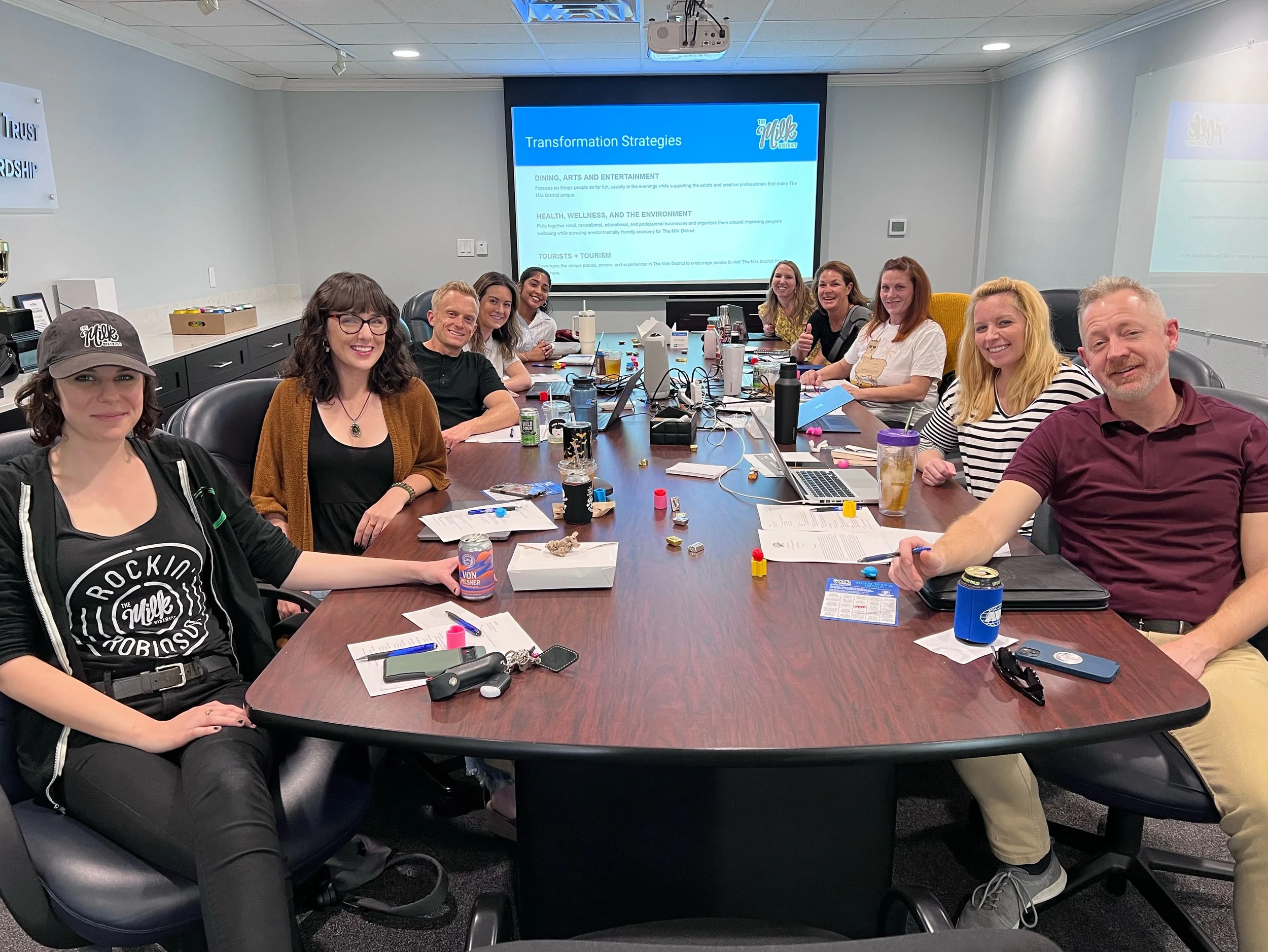
Nonprofit Executive Leadership, Organizational Turnaround, Community Economic Development
Organization: The Milk District Main Street
Role: Executive Director | 2018–2023
Location: Orlando, Florida
Overview
When I became Executive Director of The Milk District, I inherited a nonprofit with an empty bank account, a board of committed community volunteers still learning the responsibilities of nonprofit governance, and an ambitious mandate to support one of Orlando's most distinctive commercial neighborhoods.
Over my tenure, I grew the organization sixfold, strengthened its governance, developed an accessible membership model, and built partnerships that brought resources and influence well beyond our operating budget.
The approach reflected the neighborhood itself: independent, entrepreneurial, collaborative, and comfortable figuring things out along the way.
But behind that do-it-yourself spirit was a deliberate organizational strategy. I worked to establish the financial foundation, board structures, and institutional relationships necessary to turn grassroots enthusiasm into sustainable community leadership.
And I held every initiative to three expectations: it needed to create value for individual businesses, strengthen the neighborhood, and contribute to meaningful change in the larger systems shaping its future.
The goal was never to build a bigger organization for its own sake. It was to build an organization capable of doing bigger things.
The Challenge
The Milk District was home to more than 100 businesses, many independently owned and operating with small teams, narrow margins, and limited capacity to participate in traditional business associations.
Yet the district faced complex challenges requiring organized, sustained leadership: transportation infrastructure, commercial investment, small business competitiveness, public policy, neighborhood identity, and the competing demands of continued development.
The organization itself needed attention. Financial resources were nearly nonexistent, and the volunteer board, while deeply invested in the community, needed clearer governance structures and a stronger understanding of its responsibilities.
Membership revenues were necessarily limited by what small businesses could reasonably contribute. City funding provided important support, but the organization needed to build the local financial participation required to leverage that investment.
There was also a cultural consideration. The Milk District was full of people who had built successful businesses by doing things their own way. A conventional, top-down approach to district management would have been a poor fit.
The challenge was not simply to raise money or deliver programming.
It was to build a financially sustainable, professionally managed organization that could turn modest resources into meaningful influence without losing the independent character of the community it represented.
Strategy
-
The first challenge was organizational, not programmatic.
I inherited a nonprofit with no financial cushion and a board made up of well-meaning community members who cared deeply about the neighborhood but had limited experience with nonprofit governance.
Before the organization could grow, we needed a shared understanding of how it should operate.
I worked alongside board members to clarify the distinction between governance and management, establish expectations around financial oversight and fiduciary responsibility, and develop a more effective working relationship between the board and executive leadership.
This was not about imposing corporate formality on a grassroots organization. It was about helping committed volunteers become effective stewards of an organization with real responsibilities to its members, funders, and community.
At the same time, I focused on rebuilding the financial foundation. Through membership development, leveraging the City of Orlando's matching contribution, and creating new opportunities for earned and contributed support, I grew the organization sixfold over my tenure.
That growth was not simply a financial achievement. It meant greater organizational capacity, more credibility with institutional partners, and the ability to pursue opportunities that previously would have been out of reach.
We kept the DIY ethos. We built the infrastructure to support it.
-
A membership organization serving small independent businesses needs to be accessible to small independent businesses.
I developed a membership structure that recognized the different capacities of neighborhood stakeholders, creating ways for smaller operators to participate without requiring the financial commitments typical of larger business associations.
Membership was about more than collecting dues. It created a structure for participation, shared promotion, relationship building, and collective advocacy.
The organization's operating philosophy reflected the same do-it-yourself ethos that defined the neighborhood. We prioritized practical solutions, direct relationships, entrepreneurial experimentation, and the ability to act without creating unnecessary layers of process.
Professional management did not have to mean becoming corporate. It meant giving a proudly independent community the organizational tools to accomplish things together.
-
The Milk District participated in the City of Orlando's Main Street program, which provided a matching contribution to support district operations.
That arrangement made local investment especially important. Membership contributions and other eligible locally generated support helped sustain the organization while leveraging municipal resources.
My responsibility was to manage those resources strategically, balancing the immediate needs of members with the longer-term work of developing the district.
This required making choices about what the organization should fund directly, what could be supported through volunteers, and where another institution might be better positioned to contribute resources or expertise.
A limited budget was a constraint, but it also encouraged discipline. The question was not simply whether an idea was worthwhile. It was whether our involvement represented the best use of the organization's capacity.
-
One of the most valuable things a district organization can offer is a place where different interests become aligned.
Rather than approaching every opportunity as something The Milk District needed to pay for or manage alone, I worked to identify organizations and government departments with complementary goals.
The City of Orlando's bicycle and pedestrian transportation team was one example. The Milk District offered an active urban neighborhood where transportation ideas could be piloted, studied, and demonstrated in a real-world setting.
For the City, those collaborations created opportunities to advance transportation planning and test approaches with a community partner. For The Milk District, they connected neighborhood priorities with technical expertise, institutional capacity, and funding beyond our own operating budget.
This approach helped position the organization as more than a recipient of municipal support. We became a useful partner in achieving broader civic objectives.
-
As new development brought activity and investment to the neighborhood, I advocated for a more direct relationship between the economic value generated within The Milk District and the public improvements needed to support it.
Development could generate municipal revenues and development-related funding, but those resources did not automatically translate into visible improvements for the surrounding community.
I pushed for available district-generated public resources to be reinvested locally, connecting growth with the infrastructure, mobility, public spaces, and neighborhood improvements that would benefit existing businesses and residents.
This required engaging beyond the traditional scope of marketing and event programming. It meant understanding public funding mechanisms, municipal decision-making, and how neighborhood priorities could be advanced within larger government systems.
The principle was straightforward: a neighborhood contributing to Orlando's growth should also share meaningfully in the public benefits of that growth.
-
The value of that organizational infrastructure became especially clear during COVID-19.
With independent businesses facing extraordinary uncertainty, I worked to mobilize neighborhood relationships, community support, and creative fundraising into immediate economic activity.
We launched Milk Money, a discount certificate program that encouraged customers to support local businesses during pandemic disruptions. In 2020, the initiative sold 1,850 certificates across 35 participating businesses, generating more than $40,000 in directly related economic activity.
We also created an auction of distinctly Milk District experiences, designed to generate support without asking struggling businesses to absorb substantial additional costs. Opportunities included a Sub of the Week experience at Stasio's Italian Deli and the chance to put a personal message on the historic Beefy King sign.
These ideas took advantage of something our businesses still had, even when normal commerce was disrupted: devoted customers, neighborhood character, and experiences people could not find anywhere else.
The district lost just two businesses during the pandemic, an outcome that underscored the resilience of its independent business community. While the broader national picture was complex, Main Street America's research documented widespread financial strain, job losses, and businesses drawing on personal savings or additional debt to remain open.
Our response demonstrated something essential about the organization we had built: its value was not just in the programs it operated, but in its ability to organize people and resources when the community needed it most.
-
I approached organizational priorities through three connected lenses:
Business outcomes. Would the work help individual businesses attract customers, reduce barriers, build capacity, or find new opportunities?
Neighborhood outcomes. Would it strengthen the district's identity, accessibility, vitality, relationships, or long-term economic health?
Systems-level outcomes. Could it influence a policy, improve how government delivers services, establish a new partnership model, or create opportunities beyond the neighborhood itself?
Not every initiative delivered equally at all three levels, but considering them together helped us invest our limited capacity where it could create the greatest long-term value.
A promotional event could support merchants while building a stronger neighborhood identity. A transportation pilot could improve a local street while informing citywide mobility planning. A regulatory change could help one restaurant and ultimately expand opportunities for independent businesses across Orlando.
This was how a small district organization could operate with an impact far larger than its balance sheet.
Results
Under my leadership, The Milk District grew sixfold, moving from an organization with virtually no financial reserves to a more sustainable nonprofit with expanded capacity to serve businesses and advocate for the neighborhood.
Just as importantly, we strengthened the organizational foundation supporting that growth.
Financial recovery and growth: Rebuilt the organization's financial foundation through membership development, municipal matching support, and diversified revenue opportunities.
Stronger governance: Worked with the volunteer board to clarify roles, strengthen financial oversight, and establish a more effective relationship between governance and executive management.
Accessible business participation: Developed a membership structure suited to small independent businesses, connecting them to shared resources, promotion, and collective advocacy.
Economic resilience: Mobilized neighborhood support during COVID-19 through programs including Milk Money, which generated more than $40,000 in directly related economic activity in 2020, while the district experienced only two business losses during the pandemic.
Expanded institutional partnerships: Established working relationships with municipal departments and community organizations that brought additional expertise, resources, and implementation capacity into the neighborhood.
Stronger neighborhood advocacy: Elevated The Milk District's role in conversations about development, transportation, public investment, and small business policy.
Broader policy impact: Contributed to advocacy that produced Florida legislation creating more accessible liquor licensing opportunities for qualifying restaurants in Orlando's Main Street districts.
National recognition and knowledge sharing: Shared The Milk District's approaches with the national Main Street network, including an article I authored for Main Street America on community-centred merchandising and a presentation at the Main Street Now conference. These opportunities demonstrated how a small neighborhood organization could develop ideas relevant to other commercial districts, from creative revenue generation to supporting local entrepreneurs and makers through initiatives such as Milk Mart.
Sustained community involvement: Built an organizational model that mobilized volunteers, supported entrepreneurs, and advanced neighborhood initiatives beyond what staff resources alone could accomplish.
City of Orlando Main Street reporting documented significant district-wide activity during 2021 and 2022, including 38 new businesses, 282 reported jobs created, more than $8.5 million in improvements and investment, and 1,915 volunteer hours.
Those economic outcomes reflected the collective efforts of property owners, entrepreneurs, residents, public agencies, volunteers, and community partners. They were not investments or jobs created by the organization alone.
My contribution was building and leading a structure that connected those stakeholders, gave independent businesses a collective voice, and helped direct more attention and resources toward the neighborhood's future.
Ultimately, the measure of effective nonprofit leadership is not the size of the organization. It is what the organization makes possible.
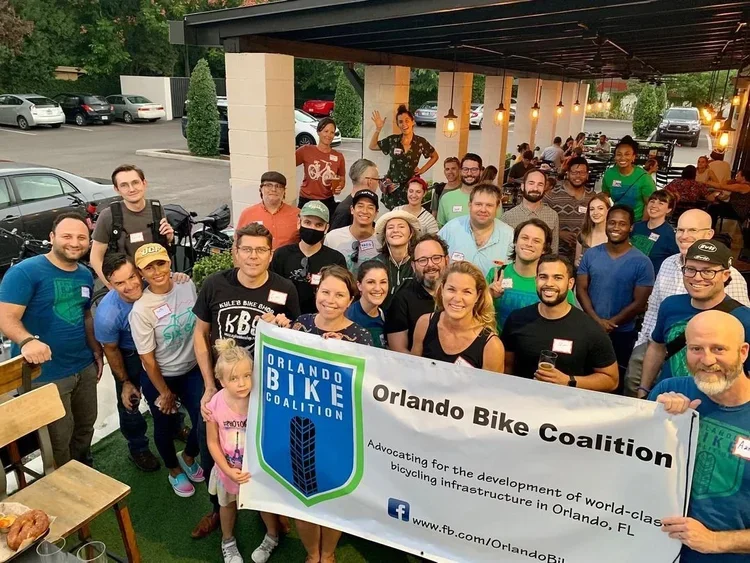
Bikes Mean Business
Working with the City of Orlando and local transportation partners, I mobilized Milk District businesses to pursue national Bicycle Friendly Business certification. The Milk District alone earned more certifications than any entire city in the country.
Beyond national recognition, the initiative demonstrated business demand for better cycling infrastructure, strengthening our advocacy for public investment.
Skills Demonstrated
Nonprofit executive leadership and organizational turnaround
Board governance and leadership development
Strategic planning and organizational management
Budget oversight and financial stewardship
Membership development and revenue diversification
Crisis leadership and economic resilience
Public-private partnerships
Government relations and municipal advocacy
Community-based economic development
Stakeholder engagement and coalition building
Small business support and entrepreneurship
Public investment and infrastructure advocacy
Volunteer mobilization and organizational capacity building
National thought leadership and knowledge sharing
Systems thinking and cross-sector collaboration
